
Conventional Dental Implants
Dental Implants in Naranpura, Ahmedabad
Restore Your Smile with Precision Implantology at Sanghvi Face & Dental Hospital
A missing tooth is more than just a cosmetic concern—it can lead to bone loss, shifting of adjacent teeth, and difficulty in chewing. Dental Implants are the gold standard for tooth replacement, offering a permanent solution that looks, feels, and functions exactly like a natural tooth.
At Sanghvi Face & Dental Hospital, Dr. Darshan Sanghvi provides expert care in both conventional and advanced implantology, ensuring that even patients with significant bone loss can regain a full, functional smile.
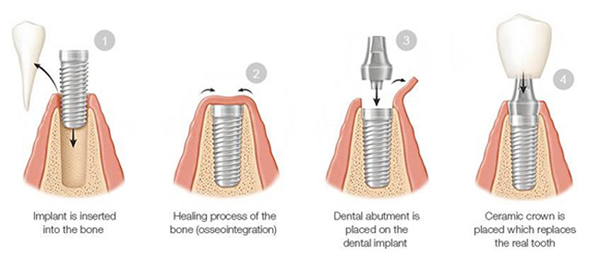
What Are Conventional Dental Implants?
A dental implant is a small titanium post that acts as a replacement for the root of a missing tooth. Because titanium is biocompatible, it fuses with your jawbone through a process called Osseointegration, providing a rock-solid foundation for a custom-made crown.
- Normal Implantology: Simple Tooth Replacement
For patients with adequate jawbone density, we offer routine implant procedures that are quick, minimally invasive, and highly successful.
- Single Tooth Replacement: Replacing a single missing tooth without grinding down neighboring healthy teeth (unlike traditional bridges).
- Multiple Teeth Replacement: Utilizing implant-supported bridges to restore several missing teeth in a row.
- Immediate Implants: In many cases, we can place the implant in the same sitting as the tooth extraction, saving you months of waiting time.
- Advanced Implantology: Solutions for Complex Cases
Many patients are told they “Don’t have enough bone” for implants. As a Maxillofacial Surgeon, Dr. Darshan Sanghvi specializes in advanced techniques to rebuild the foundation for successful implants:
- Sinus Lift Surgery: If the sinus cavity is too close to the upper jaw, we gently “lift” the sinus and add bone graft material to create space for an implant.
- Bone Grafting & Augmentation: Using high-quality bone substitutes to strengthen a thin or recessed jawbone.
- Full Mouth Rehabilitation: Replacing all upper or lower teeth using All-on-4 or All-on-6 techniques.
- Guided Implant Surgery: We use 3D CT scans and computer-generated guides to place implants with sub-millimetre precision, reducing surgery time and swelling.
When Are Conventional Implants Needed?
One or more missing teeth due to decay, trauma, or gum disease
Adequate bone height and width in the jaw
Good oral hygiene and overall health
Desire for a long-term fixed solution over removable dentures
Benefits of Conventional Dental Implants
Durability
With proper care, dental implants can last a lifetime.
Stability
Implants provide a secure foundation for replacement teeth, offering greater stability compared to other options like dentures.
Improved Appearance
Implants look and feel like natural teeth, restoring your smile's natural appearance.
Improved Function
Implants allow you to eat and speak comfortably, improving your quality of life.
Preservation of Bone
Implants stimulate the jawbone, preventing bone loss that can occur with other tooth replacement options.
Process
Consultation
You'll meet with a dentist to discuss your options and see if you're a good candidate.
CBCT of Jaw Bone
CBCT is a 3D X-ray technology that creates detailed images of your jawbone and surrounding structures, aiding in precise dental implant planning
Surgery
A minor surgical procedure is performed to place the implants into your jawbone. You'll be given anesthesia to keep you comfortable.
Healing
This is the most important part! You'll need to give your body time (usually a few months) to heal and for the implants to fuse with your bone.
Abutment Placement:
A small connector called an abutment is attached to the implant.
Crown Placement
Finally, a custom-made crown (which looks and feels like a real tooth) is attached to the abutment.
Why Choose Sanghvi Face & Dental Hospital?
- Surgeon-Led Care: Unlike general dentists, Dr. Darshan is a Maxillofacial Surgeon, meaning he has deeper expertise in bone biology and surgical safety.
- Painless Experience: We use advanced local anaesthesia and sedation options to ensure your comfort throughout the procedure.
- Premium Materials: We use only world-class, FDA-approved implant systems known for their long-term durability.
- Aesthetic Focus: We ensure the final crown matches the colour, shape, and translucency of your natural teeth perfectly.
FAQs
With proper oral hygiene and regular check-ups at our Naranpura clinic, dental implants are designed to be a lifetime solution.
Most patients report that the procedure involves less discomfort than a standard tooth extraction. We provide a comprehensive post-operative care kit to manage any minor swelling.
Age is rarely a factor. As long as you are in reasonably good health and have adequate bone (or are a candidate for bone grafting), you can enjoy the benefits of dental implants well into your 80s and 90s.
Schedule Your Implant Consultation in Ahmedabad
- Specialist: Dr. Darshan Sanghvi (Con. Oral and Maxillofacial Surgeon & Implantologist)
- Location: Sanghvi Face and Dental Hospital, Opp Ankur Bus Stop, Naranpura, Ahmedabad , Gujarat – 13
- Contact: 079 – 27439850, 07990550920, 9824099850
- Book Your Appointment : https://calendar.app.google/ibP7s8QtjL6toUSRA
